


Download Ebook A Life In Leadership: From D-Day to Ground Zero: An Autobiography, by John C. Whitehead
Yes you're right; this publication that is offered in this site remains in the soft documents. However, it does not mean that it will certainly decrease the web content of the book. It exactly adds the benefits. You could copy the soft apply for your very own tool as well as read it every time you desire. A Life In Leadership: From D-Day To Ground Zero: An Autobiography, By John C. Whitehead is constantly being among the recommended publications to review, by many individuals on the planet.
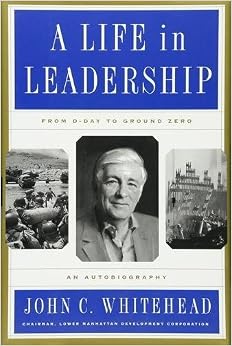
A Life In Leadership: From D-Day to Ground Zero: An Autobiography, by John C. Whitehead

Download Ebook A Life In Leadership: From D-Day to Ground Zero: An Autobiography, by John C. Whitehead
When one is dealt with to the problems, several decide to seek the ideas as well as amusement by reading. Are you one of them? However, from these several, it will be different on just how they select the books to review. Some may like to obtain the literature or fiction, some may had much better to obtain the social or science publications, or faiths publication brochures. Nevertheless, all books can give you all finest if you're really sincere to read it.
When having free time, what should you do? Just resting or seating in the house? Total your downtime by reading. Begin with currently, you time should be precious. One to proffer that can be checking out material; this is it A Life In Leadership: From D-Day To Ground Zero: An Autobiography, By John C. Whitehead This publication is supplied not only for being the material analysis. You recognize, from seeing the title and also the name of author, you need to understand how the top quality of this publication. Also the author and also title are not the one that makes a decision guide is good or not, you can contrast t with the experience and understanding that the writer has.
Are you truly a follower of this A Life In Leadership: From D-Day To Ground Zero: An Autobiography, By John C. Whitehead If that's so, why don't you take this publication currently? Be the initial individual that like and also lead this publication A Life In Leadership: From D-Day To Ground Zero: An Autobiography, By John C. Whitehead, so you can obtain the reason and messages from this book. Don't bother to be puzzled where to obtain it. As the various other, we discuss the link to check out as well as download the soft data ebook A Life In Leadership: From D-Day To Ground Zero: An Autobiography, By John C. Whitehead So, you may not carry the printed book A Life In Leadership: From D-Day To Ground Zero: An Autobiography, By John C. Whitehead almost everywhere.
Simply link to the web to get this book A Life In Leadership: From D-Day To Ground Zero: An Autobiography, By John C. Whitehead This is why we indicate you to use and make use of the established innovation. Reading book does not mean to bring the printed A Life In Leadership: From D-Day To Ground Zero: An Autobiography, By John C. Whitehead Created modern technology has actually allowed you to read only the soft data of guide A Life In Leadership: From D-Day To Ground Zero: An Autobiography, By John C. Whitehead It is very same. You could not need to go and also obtain traditionally in searching guide A Life In Leadership: From D-Day To Ground Zero: An Autobiography, By John C. Whitehead You may not have adequate time to invest, may you? This is why we give you the very best means to obtain guide A Life In Leadership: From D-Day To Ground Zero: An Autobiography, By John C. Whitehead now!
From Publishers Weekly
In November 2001, New York's Governor Pataki asked Whitehead to head up the Lower Manhattan Development Council. Although Whitehead reports that he was initially reluctant to take the job-he had just retired and wanted to spend some time traveling and catching up on reading-he eventually consented because he wanted to contribute to his city's redevelopment in the wake of 9/11. For this memoir, Whitehead trudges through the events of his life from his childhood in New Jersey and his years in the Navy to his leadership of Goldman Sachs and his part-ownership of the New Jersey Devils in tedious, meticulous detail. Whitehead observes that he learned most his leadership lessons (honesty, loyalty) from his years as a Boy Scout. He recalls how those years in scouting also led to lifelong friendships, such as the one with John McMullen, the friend with whom he later co-owned the Devils hockey team. He recalls with humor the time that he drove Henry Ford to his New York hotel in a Chevrolet, and he recounts his many years of work for non-profit organizations such as the International Rescue Committee. Finally, Whitehead offers a few lessons in leadership: "The best leaders do a lot of listening," leaders should be willing to delegate tasks and "effective leadership has to have an ethical dimension." Copyright © Reed Business Information, a division of Reed Elsevier Inc. All rights reserved.
Read more
Review
"If we hope to recapture a different industry ethos, this book should be required reading for all new hires." -- New York Observer, August 8, 2005"The principles of leadership that [Whitehead] advances emerge quietly in the book as they seem to in his life." -- U.S. Naval Institute, September 2005
Read more
See all Editorial Reviews
Product details
Hardcover: 304 pages
Publisher: Basic Books (June 1, 2005)
Language: English
ISBN-10: 0465050549
ISBN-13: 978-0465050543
Product Dimensions:
6.5 x 1 x 9.5 inches
Shipping Weight: 1.1 pounds (View shipping rates and policies)
Average Customer Review:
4.7 out of 5 stars
8 customer reviews
Amazon Best Sellers Rank:
#257,529 in Books (See Top 100 in Books)
A brief summary of John Whitehead's accomplishments thus far indicates the nature and extent of his "life in leadership": most recently, chairman of the Lower Manhattan Development Corporation (LMDC); previously, co-chairman of Goldman Sachs and then deputy secretary of state, second-in-command to Secretary George Shultz, in the Reagan administration; also tenures as chairman of the governing boards (at one point or another) of the Federal Reserve Bank of New York, the United Nations Association, the International Rescue Committee, the Harvard Board of Overseers, Haverford College from which he earned a B.A. degree, and the Asia Society. It should also be noted that, during World War Two, Ensign Whitehead commanded a Landing Craft, Vehicle, Personnel (LCVP) or "Higgins boat" that successfully delivered troops to Omaha beach on the first day of the Normandy Invasion.With all due respect to Whitehead's numerous and considerable accomplishments, however, what most impressed throughout his memoirs is his passionate commitment to being an effective leader of others whose welfare has been entrusted to his care. He has always cared deeply, indeed passionately about sustaining that commitment, whatever the given circumstances may be.As a case in point, after retiring from Goldman Sachs, Whitehead was determined to disengage himself from his various responsibilities and therefore "was dead set against" accepting New York Governor George Pataki's invitation to serve as chairman of the LMDC, following the attack on the World Trade Center. After completing a rigorous analysis of the "pros" and "cons" of acceptance, "it was clear to me that I had to say no." Then, after he looked around his office at all the photographs and memorabilia, "I took a deep breath, and I knew what I had to do. I picked up the phone again and dialed the governor, and when he came on the line I told him I'd accept." There are dozens of other, comparable situations in which White also had to make an especially difficult decision, none of which he later regretted. "I don't allow myself that luxury. What's done is done."There are several important lessons that can be learned from Whitehead's personal as well as professional experiences that he so generously shares in this volume. Those of greatest interest and value to me include these three:1. Effective leadership is first and foremost both a privilege and an obligation; those who would lead others must embrace the obligations of trust, compassion, and dedication as well as of rigorous preparation, precise and enlightened decision-making, and courage. It is worth recalling that Dante reserved the last and worst ring in hell for those who, in a moral crisis, preserved their neutrality.2. Effective leadership also requires not only an understanding and appreciation of teamwork but also a determination to help develop effective leadership skills in one's associates. Hence the importance of recognizing and, yes, celebrating the achievements of others.3. Finally, effective leadership functions simultaneously within three dimensions: the intellectual, the emotional, and the spiritual. Throughout history, the greatest leaders are those who possess (a) highly refined analytical skills and sufficient knowledge that enable them to make appropriate decisions, (b) a temperament that enables them to sustain a proper balance of what is most important, and also (c) what is often referred to as a "moral compass." As Bill George has so eloquently explained in his book True North, authentic leaders must be authentic people.When concluding his memoirs, Whitehead observes that he can't help thinking how "lucky" he has been. "Mine has been a good life, filled with lots of fun, interesting experiences, drama, and an engagement with serious issues at the highest level...I have lived at a time when there has been a lot to be done, from fighting the Nazis to battling terrorists. I like to think I have risen to many of these challenges in my own quiet fashion, and I am confident that the next generation of leaders will meet them in their turn. I have been glad to do my part in all of these great endeavors. More than glad. From first to last, I have been thrilled to be in on the action."John Whitehead is an exemplary leader but also, in my opinion, an exemplary human being. My hope now is that many others, especially those preparing for a career or who have only recently embarked on one, will read and then re-read this compelling personal account of a life well-lived, committing themselves to honorable and productive service when they are also "in on the action," whenever and wherever that may be.A brief summary of John Whitehead accomplishments thus far indicates the nature and extent of his "life in leadership": most recently, chairman of the Lower Manhattan Development Corporation LMDC); previously, co-chairman of Goldman Sachs and then deputy secretary of state, second-in-command to Secretary George Shultz, in the Reagan administration; also tenures as chairman of the governing boards (at one point or another) of the Federal Reserve Bank of New York, the United Nations Association, the International Rescue Committee, the Harvard Board of Overseers, Haverford College from which he earned a B.A. degree, and the Asia Society. It should also be noted that, during World War Two, Ensign Whitehead commanded a The Landing Craft, Vehicle, Personnel (LCVP) or "Higgins boat" that successfully delivered troops to Omaha beach on the first day of the Normandy Invasion.With all due respect to Whitehead's numerous and considerable accomplishments, however, what most impressed throughout his memoirs is his passionate commitment to being an effective leader of others whose welfare has been entrusted to his care. He has always cared deeply, indeed passionately about sustaining that commitment, whatever the given circumstances may be.As a case in point, after retiring from Goldman Sachs, Whitehead was determined to disengage himself from his various responsibilities and therefore "was dead set against" accepting New York Governor George Pataki's invitation to serve as chairman of the LMDC, following the attack on the World Trade Center. After completing a rigorous analysis of the "pros" and "cons" of acceptance, "it was clear to me that I had to say no." Then, after he looked around his office at all the photographs and memorabilia, "I took a deep breath, and I knew what I had to do. I picked up the phone again and dialed the governor, and when he came on the line I told him I'd accept." There are dozens of other, comparable situations in which White also had to make an especially difficult decision, none of which he later regretted. "I don't allow myself that luxury. What's done is done."There are several important lessons that can be learned from Whitehead's personal as well as professional experiences that he so generously shares in this volume. Those of greatest interest and value to me include these three:1. Effective leadership is first and foremost both a privilege and an obligation; those who would lead others must embrace the obligations of trust, compassion, and dedication as well as of rigorous preparation, precise and enlightened decision-making, and courage. It is worth recalling that Dante reserved the last and worst ring in hell for those who, in a moral crisis, preserved their neutrality.2. Effective leadership also requires not only an understanding and appreciation of teamwork but also a determination to help develop effective leadership skills in one's associates. Hence the importance of recognizing and, yes, celebrating the achievements of others.3. Finally, effective leadership functions simultaneously within three dimensions: the intellectual, the emotional, and the spiritual. Throughout history, the greatest leaders are those who possess (a) highly refined analytical skills and sufficient knowledge that enable them to make appropriate decisions, (b) a temperament that enables them to sustain a proper balance of what is most important, and also (c) what is often referred to as a "moral compass." As Bill George has so eloquently explained in his book True North, authentic leaders must be authentic people.When concluding his memoirs, Whitehead observes that he can't help thinking how "lucky" he has been. "Mine has been a good life, filled with lots of fun, interesting experiences, drama, and an engagement with serious issues at the highest level...I have lived at a time when there has been a lot to be done, from fighting the Nazis to battling terrorists. I like to think I have risen to many of these challenges in my own quiet fashion, and I am confident that the next generation of leaders will meet them in their turn. I have been glad to do my part in all of these great endeavors. More than glad. From first to last, I have been thrilled to be in on the action."John Whitehead is an exemplary leader but also, in my opinion, an exemplary human being. My hope now is that many others, especially those preparing for a career or who have only recently embarked on one, will read and re-read this compelling personal account of a life well-lived, then commit themselves to honorable and productive service when they are also "in on the action," wherever that may be.
I found this autobiography very concisely written by a very humble man from modest origins who eventually rose to co-senior partner of Goldman Sachs, followed by his decision to leave banking and enter public service work. I particularly found the part where he discusses the bold changes he brought to Goldman Sachs most interesting (introducing "new businessmen" to "sell" investment banking services, internationalizing Goldman Sachs businesses, using accounting goals to motivate employees and improve performance, etc.) Overall, this is an excellent autobiography and gets the reader inside the head of major leader like Mr. Whitehead.
OK
This book is referenced in Sorkin's "Too Big Too Fail". It mentions this book is required reading for Goldman employees. It provides a good history of Goldman and some interesting insights into Reagan's leadership. Worth reading, easy to read and fun.CWSCleveland, Ohio
this book is about a true american hero. he is outstanding as a human being, a business man, a world war ll veteran, a philanthropist...a man of outstanding character and commitment to doing the best for our country and anything he gets involved with.
He was borned into a great era, took on an amazing experience, had a stella career and set a great example.
This fascinating book will be of interest to a wide array of readers. Previously, I knew a little about John Whitehead's illustrious career of leadership in three sectors: as an icon of Wall Street, Deputy Secretary of State, and a philanthropist. Whitehead describes how his professional and personal goals were achieved. With humor and low-key modesty, he shares his experiences throughout his life, and admits to the cases of serendipity that marked aspects of his career.Readers interested in business and finance will enjoy reading how John Whitehead realized his vision of turning Goldman Sachs & Co. into a global investment banking powerhouse by the application of straight-forward methods. With determination, clear-thinking, good planning, and honesty, he rose at Goldman Sachs from a young Harvard MBA to co-chairman in the span of 29 years.Whitehead promoted innovations at Goldman Sachs that were later adopted throughout the investment banking industry: the first initial public offering, preferred stocks and convertible bonds. His nine-point memo with advice to the New Business Department was revolutionary at the time. It included the famous aphorism, "You can never learn anything when you're talking." The co-chairmanship of Goldman Sachs that he established with John Weinberg was a novel leadership solution, as no Wall Street firm had ever had two chairmen before. John Whitehead displayed determination and thoroughness in his work. For example, no one outside of privately-held Ford Motor Company knew exactly how big the company was. In the mid-1950s, Whitehead took the train up to Boston and personally went through the public records in the Commonwealth of Massachusetts files, to find a copy of Ford's balance sheet. This information stimulated Goldman Sachs to initiate a relationship with Ford, which culminated in its managing the IPO of the largest family-owned company in the world.For readers interested in foreign policy, the book illustrates how to achieve results inside the government. Even before his confirmation as Deputy Secretary of State under President Reagan, in the face of Senator Jesse Helms' obstructionism, he learned the value of speaking directly to an adversary in a successful effort to work things out. Whitehead wanted to make a difference in the world, which he accomplished "with just a little insight and persistence." One of his key successes was to begin the process of weaning Eastern Europe away from the Soviet Union through astute diplomacy, while US foreign policy was still focused on Moscow. He gives a riveting account of his meetings with Lech Walesa and Poland's president Jaruzelsky, Rumania's president Ceaucescu, and Bulgaria's dictator Zhivkov.John Whitehead also made a strong imprint in the world of nonprofits. "They appealed to the idealistic side of my nature," he writes. Over the course of his life, he has given away more than $100 million. His involvement in nonprofits began with assistance to freedom fighters resisting the Soviet invasion of Hungary in 1956. He describes his exciting experiences with US-supported mujahedin fighting Russian invaders in Afghanistan, including witnessing an attack on a Soviet fort led by a Harvard Law School graduate from Pakistan! More recently, Whitehead's chairmanship of numerous nonprofits - notably the International Rescue Committee, United Nations Association, Youth for Understanding, International House, and The Asia Society - coincided with their spectacular growth.What makes Whitehead's book especially appealing are the captivating details about his personal life. He relates how his dashing father would land his single-engine plane during World War I on an athletic field on the Bryn Mawr campus, to court his future wife. Upon graduating from high school, John Whitehead worked at the 1939 World's Fair running a concession guessing customers' weights. That summer, he earned enough to pay for his first year's tuition at Haverford College. When he joined the State Department, his daughter made up flash cards to help him memorize the capitals and the names of the political leaders of the 185 countries recognized by the United States.The book enters the new millennium with John Whitehead's tenure as chairman of the Lower Manhattan Development Corporation, to which he was appointed by Governor Pataki. Its mission was to rebuild the World Trade Center following the tragedy of 9-11. Whitehead describes the vision and challenges of rebuilding Ground Zero. The book concludes with his ideas about leadership, and comments about foreign policy and the general state of the nation. In Whitehead's model of "quiet leadership," the most effective leaders are patient, thoughtful people who are guided by high ideals and do a lot of listening. The ethical dimension of John Whitehead's life and leadership style, and his credo of "doing well while doing good," are truly inspiring - as is this book.
A Life In Leadership: From D-Day to Ground Zero: An Autobiography, by John C. Whitehead PDF
A Life In Leadership: From D-Day to Ground Zero: An Autobiography, by John C. Whitehead EPub
A Life In Leadership: From D-Day to Ground Zero: An Autobiography, by John C. Whitehead Doc
A Life In Leadership: From D-Day to Ground Zero: An Autobiography, by John C. Whitehead iBooks
A Life In Leadership: From D-Day to Ground Zero: An Autobiography, by John C. Whitehead rtf
A Life In Leadership: From D-Day to Ground Zero: An Autobiography, by John C. Whitehead Mobipocket
A Life In Leadership: From D-Day to Ground Zero: An Autobiography, by John C. Whitehead Kindle
0 comments:
Post a Comment