


Ebook Download The Deities Are Many: A Polytheistic Theology (SUNY Series in Religious Studies)
One to keep in mind when mosting likely to read this book is setting the time perfectly. Never ever try it in your hurried time, obviously it can interrupt you not to get negative point. This book is extremely extended as it has different means to inform and explain to the visitors, from nonetheless regarding this book contents. You could feel at first concerning just what type of realities to give in this The Deities Are Many: A Polytheistic Theology (SUNY Series In Religious Studies), but also for certain, it will certainly go through for others.
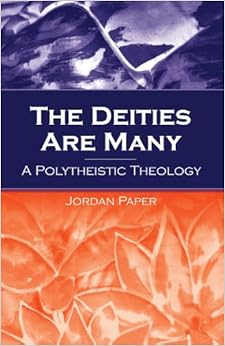
The Deities Are Many: A Polytheistic Theology (SUNY Series in Religious Studies)

Ebook Download The Deities Are Many: A Polytheistic Theology (SUNY Series in Religious Studies)
The Deities Are Many: A Polytheistic Theology (SUNY Series In Religious Studies). Reading makes you much better. Which states? Several sensible words state that by reading, your life will be a lot better. Do you think it? Yeah, confirm it. If you require the book The Deities Are Many: A Polytheistic Theology (SUNY Series In Religious Studies) to check out to confirm the smart words, you can see this web page flawlessly. This is the site that will certainly supply all the books that most likely you require. Are the book's compilations that will make you feel interested to read? One of them right here is the The Deities Are Many: A Polytheistic Theology (SUNY Series In Religious Studies) that we will certainly recommend.
Poses currently this The Deities Are Many: A Polytheistic Theology (SUNY Series In Religious Studies) as one of your book collection! But, it is not in your bookcase collections. Why? This is guide The Deities Are Many: A Polytheistic Theology (SUNY Series In Religious Studies) that is provided in soft file. You could download and install the soft data of this amazing book The Deities Are Many: A Polytheistic Theology (SUNY Series In Religious Studies) currently and also in the web link provided. Yeah, various with the other people which look for book The Deities Are Many: A Polytheistic Theology (SUNY Series In Religious Studies) outside, you could obtain easier to present this book. When some individuals still walk into the store and also search the book The Deities Are Many: A Polytheistic Theology (SUNY Series In Religious Studies), you are right here only remain on your seat and get the book The Deities Are Many: A Polytheistic Theology (SUNY Series In Religious Studies).
Are you still puzzled why should be this book? After having terrific job, you could not require something that is really tough. This is just what we state as the affordable book to check out. It will not only give enjoyment for you. It will provide life lesson behind the enjoyable functions. From this situation, it is surely that this publication is appropriate for you and for all people who require simple and enjoyable book to review.
When offering The Deities Are Many: A Polytheistic Theology (SUNY Series In Religious Studies) as one of the collections of many books here, we think that it can be one of the most effective books noted. It will certainly have many fans from all nations viewers. As well as precisely, this is it. You could actually expose that this publication is just what we believed at first. Well currently, let's seek for the various other book title if you have actually got this book review. You might locate it on the search column that we provide.
About the Author
Jordan Paper is Professor Emeritus of Humanities (Religious Studies, East Asian Studies) at York University. He is also an Associate Fellow at the Centre for Studies in Religion and Society and Adjunct Professor in the Indigenous Governance Program at the University of Victoria. He is the author of several books, including The Mystic Experience: A Descriptive and Comparative Analysis and The Spirits Are Drunk: Comparative Approaches to Chinese Religion, both published by SUNY Press, as well as Through the Earth Darkly: Female Spirituality in Comparative Perspective and Offering Smoke: The Sacred Pipe and Native American Religion.
Read more
Product details
Series: SUNY Series in Religious Studies
Paperback: 169 pages
Publisher: SUNY Press (March 17, 2005)
Language: English
ISBN-10: 0791463885
ISBN-13: 978-0791463888
Product Dimensions:
5.5 x 0.4 x 8.5 inches
Shipping Weight: 9.8 ounces (View shipping rates and policies)
Average Customer Review:
4.8 out of 5 stars
7 customer reviews
Amazon Best Sellers Rank:
#1,605,003 in Books (See Top 100 in Books)
I found this book quite illuminating. It's an interesting exploration of a perspective on theology that was pretty foreign to me as someone raised in a monotheistic household and culture.
It is not often you find a book that speaks to you and helps you understand yourself and others in simple language with real examples. This book is required reading for my Pagan Theology class and we are reading different chapters through the "course of the course".It is not dry like many of the other academic works but at least for me holds my interest and SO positively explains a spirituality that often stems from a life very different from the mainstream (i.e. summers in the North Country, hunting, growing your own food, encounters with wild lands and wild spirits). The author speaks from experience and relates personal stories. Regardless of your own spiritual path, you are likely to find reading this book to be an enriching experience.
This is a well written book from the perspective of a polytheist. You get a lot of details that would be missing had the book been written from an outside perspective. Most books on religion are dry but this one isn't. The books pretty thin but there is a lot of information packed into those pages. The book gives a survey of some polytheistic religions which is handy because you know where to look for more info on how various religions handle a given need. For instance, charity, temple building and maintenance.
This book by Professor Jordan Paper merits reading. However, the author failed to meet his own academic standards by omitting both footnotes (at times sorely missing, ex. gr. references to religious texts) and a glossary. The index is incomplete, leaving out for example Prof. Max Müller who is mentioned in the text. From an academic who refers to Western science as one of his own major mind-sets one expects more.Prof. Paper's critiques of Abrahamic, patriarchal religions are succinct and to the mark but he did not sufficiently underscore similar tendencies in 'polytheistic' religions of patriarchal civilisations like ancient Greece. Alas, he did not follow his own conclusions in writing the book, ex. gr. to use 'thealogy' instead of or with 'theology' and by referring to "A Polytheistic Theology" in the title whilst stating explicitly in the text that 'polytheism' is a pejorative label invented and applied to all forms of Heathenism by proponents of Abrahamic religions.Prof. Paper emphasised the experiential, 'subjective' nature of religions in general and non-Abrahamic ones in particular. He weaved his own experiences - and biases - into the text. Frequent amongst North Americans who have never lived in Europe, this north-western peninsula of Eurasia appears in the book like a large Christian mass much like North American, in spite of its very high degree of differentiation into some 40 officially recognised languages, many climates, countries, regions, cultures and ethnic groups. Prof. Paper forgot to mention that Christendom's victory over Heathenism required several centuries of bitter warfare and was not essentially accomplished until the conquest of Saxony by Charlemagne's Frankish alliance at the end of the 8th century CE.The author mentions some bridges like The One - The Many and Unity - Multiplicity being indispensable to each other as shown by Angels and sometimes Saints in Abrahamic religions, although their adherents usually display little to no interest in such bridges to Heathenism. Another bridge is the direct divine inspiration claimed by many heathen authors for some of their writings, ex. gr. by Three Female Muses for Hesiod's "Theogony". Could Greek Heathens rightly claim to be a 'people of the book'?The author often illustrates the extreme imbalance of Abrahamic religions in their preference, clearly confirmed by the masculine linguistic genders, names and attributes of their 'God', for the Active-Male over the Passive-Female, both in principle and in manifestation. This tendency, however, was already marked by paternalistic civilisations like ancient Greece and Aryan India. One can indeed scarcely imagine Christians praying to "Our Mother Who is in the Earth" or Muslims to "Allat", even if She were not considered part of an all-female Trinity.Prof. Paper deserves special credit for his explicit critiques of New-Age and feminist exaggerations, ex. gr. of parts of Wicca, that are indeed often contrary to the self-understanding and practices of traditional forms of Heathenism. Hardly surprising in view of Wicca's establishment almost exclusively by white Anglo-Saxons of Christian protestant origin.The author frequently referred to traditional Chinese religions to which he has direct family links. Alas, he did not mention by what portion of the population such religions, including for example family alters for Ancestresses, Ancestors and other Divinities, are currently practised in China.Prof. Paper's 'thealogy' remains somewhat ambiguous in respect of 'good-bad' (rather than 'good-evil'). His attribution of 'bad' (defined apparently according to conventional human mundane well-being) at least in part to hazardous events indicates perhaps a reluctance to directly comprehend forces known in some traditions as 'malefic', represented chiefly by Mars and Saturn.
I think there ought to be more books on polytheism, so I tend to be generous in rating them. And Jordan Paper makes some good points about polytheism and the ways in which it is superior to monotheism.The author begins by explaining what he means by "theology." Theology to him can mean "to theorize from within a particular tradition." But that does not suffice to define the term to me.We find out that the Goddesses and Gods are fairly diverse. My favorites are the perfections of attributes (such as strength, honesty, wisdom, cooperation, adventure, and so on). But others are simply representatives of non-humans (such as trees, earth, sky, or the entire planet). And some are specific to given locales, so that your Goddess may have no jurisdiction over the valley on the other side of the mountain where your neighbors live.The author discusses many of the North American and Chinese Deities and explains their natures as well as how they are hailed. There are sections on ancestral spirits, and divine ghosts.Paper explains that polytheism is natural to humans. And that the Gods and Goddesses tend to be hailed or adored, not feared. While the term "worshipper" may be appropriate for many monotheists, the more common term for polytheists is "devotee." Paper explains that the polytheistic deities "tend to be more companionable than a single, absolute, monarchial deity."The author explains that for polytheists, there is no concept of "heresy." There simply is no single religious dogma to be denied. That's not true for monotheists, who often confuse their dogmas with empirical truths. And that can lead to a very destructive fanaticism among monotheists. In addition, we can see that the major monotheistic religions tend to favor Men over Women, and can favor one race over another as well.In my opinion, we humans are varied and fickle and thus need to worship a big bunch of Goddesses and Gods. And Paper seems to imply this as well: he points out that if our prayers to one deity are not answered, it is normal to consider switching to some other deity.One obvious aspect of modern monotheism is its stultifying authoritarianism. And Paper does explain that polytheism is useful, enjoyable, and exhilarating. Still, I would have appreciated more of a discussion about the lack of authoritarianism in some forms of polytheism.Since Paper does discuss the problems of monotheism in leading us humans into conflict, I was hoping he would draw some conclusions about the future of polytheism. One possibility is that the future will be much like the past: the polytheistic religions that correspond to the human spirit will be defeated by a few monotheists at gunpoint. But I think it is more likely that such impositions of the religions of others will eventually be rejected by society, that we'll return to the Gods and Goddesses, and that They will return to us.
The Deities Are Many: A Polytheistic Theology (SUNY Series in Religious Studies) PDF
The Deities Are Many: A Polytheistic Theology (SUNY Series in Religious Studies) EPub
The Deities Are Many: A Polytheistic Theology (SUNY Series in Religious Studies) Doc
The Deities Are Many: A Polytheistic Theology (SUNY Series in Religious Studies) iBooks
The Deities Are Many: A Polytheistic Theology (SUNY Series in Religious Studies) rtf
The Deities Are Many: A Polytheistic Theology (SUNY Series in Religious Studies) Mobipocket
The Deities Are Many: A Polytheistic Theology (SUNY Series in Religious Studies) Kindle